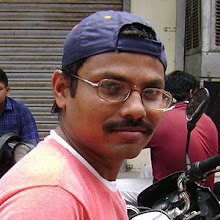
In a big relief to the Police, the Delhi High Court today refused to direct a judicial probe into the controversial Batla House encounter here, in which two suspected terrorists and a police officer were killed, by accepting the NHRC report giving a clean chit to the cops.
The High Court rejected the contention of an NGO that National Human Rights Commission (NHRC) has failed to conduct a proper investigation in reaching to the conclusion that it was not a fake encounter.
"It's (NHRC) a statutory body and if that body has come to the conclusion that it is not a fake encounter, then the court should not interfere in it","the Bench comprising Chief Justice A P Shah and Justice Manmohan said.
Holding that NHRC's findings cannot be overruled, the Bench said the human rights body's "prestige and independence has to be preserved at any cost.link
Wednesday, 26 August 2009

Kathak-salsa - a happy fusion for dance lovers
What happens when a kathak maestro meets Latino dancers? A medley of footwork, frenetic hip movement, spins and hand gestures, making for loads of "happiness" on stage.
Leading kathak exponent Uma Sharma teamed up with two Brazilian Latino dancers -- Fernanda Dias and Serginho -- in the capital for a kathak-salsa performance as part of the pre-World Dance Festival.
"India and Brazil have two very different cultures, but the meeting point is happiness," Serginho told.
As Sharma joined the high-voltage salsa and forro dancers -- the latter a northeast Brazilian dance form -- on stage to match steps and movements, she said: "Hum kisi se kum nahin (we are no less than anyone). I will improvise my kathak to blend with salsa on stage."
"The footwork, spins and energy are common between kathak and salsa and other Latino dances. However, Latino dances have more hip movements and gyrations of the belly and waist unlike kathak -- which relies on facial expression or 'natya' and hand movements. The body keeps still," Sharma told at the Brazilian embassy, which was converted into a makeshift dance hall Tuesday for the fusion performance.
"Our mastery over our facial expressions and our footwork is intricate. But since kathak is of Mughal origin, hip movements are frowned upon. But we have the same rhythm.
"In fact, the flamenco dance of Spain is very similar to kathak -- I have collaborated with several flamenco dancers. This time, I plan to fuse kathak with salsa and other Latin dances since both the genres pick up speed and tempo after a point of time. Both Indian and Brazilian dances require rigorous practice," Sharma said.
Serginho said Brazilian and Latino dances in contrast need -- "a happy and free spirit, control over breath and training".
"Indian dances have strong energy, but the movements are different. Latino dances are influenced by African and Caribbean rhythms. Our dances are more sensual, daring and hot," Serginho said.
The dancer, who is self-taught, is one of the most sought-after male dancers in Brazil. "In Brazil, dancing is like football. Everyone does it, but only those who are talented make it big on television, festivals and on professional stage. It's a fight for survival," he said.
The duo hopes to learn the basics of Indian dances while in the country to improvise on their repertoire.
The three-day World Dance Festival-cum-workshops -- featuring 100 Latino, Indian and European dancers and 17 international dance instructors -- will be held Sept 10-13 at Hotel Leela Kempinski in Gurgaon.
The festival is being sponsored by the embassies of Brazil, Cuba, Venezuela, Dominican Republic and Ecuador, along with Surya Brasil, a Brazilian cosmetics giant.link
Leading kathak exponent Uma Sharma teamed up with two Brazilian Latino dancers -- Fernanda Dias and Serginho -- in the capital for a kathak-salsa performance as part of the pre-World Dance Festival.
"India and Brazil have two very different cultures, but the meeting point is happiness," Serginho told.
As Sharma joined the high-voltage salsa and forro dancers -- the latter a northeast Brazilian dance form -- on stage to match steps and movements, she said: "Hum kisi se kum nahin (we are no less than anyone). I will improvise my kathak to blend with salsa on stage."
"The footwork, spins and energy are common between kathak and salsa and other Latino dances. However, Latino dances have more hip movements and gyrations of the belly and waist unlike kathak -- which relies on facial expression or 'natya' and hand movements. The body keeps still," Sharma told at the Brazilian embassy, which was converted into a makeshift dance hall Tuesday for the fusion performance.
"Our mastery over our facial expressions and our footwork is intricate. But since kathak is of Mughal origin, hip movements are frowned upon. But we have the same rhythm.
"In fact, the flamenco dance of Spain is very similar to kathak -- I have collaborated with several flamenco dancers. This time, I plan to fuse kathak with salsa and other Latin dances since both the genres pick up speed and tempo after a point of time. Both Indian and Brazilian dances require rigorous practice," Sharma said.
Serginho said Brazilian and Latino dances in contrast need -- "a happy and free spirit, control over breath and training".
"Indian dances have strong energy, but the movements are different. Latino dances are influenced by African and Caribbean rhythms. Our dances are more sensual, daring and hot," Serginho said.
The dancer, who is self-taught, is one of the most sought-after male dancers in Brazil. "In Brazil, dancing is like football. Everyone does it, but only those who are talented make it big on television, festivals and on professional stage. It's a fight for survival," he said.
The duo hopes to learn the basics of Indian dances while in the country to improvise on their repertoire.
The three-day World Dance Festival-cum-workshops -- featuring 100 Latino, Indian and European dancers and 17 international dance instructors -- will be held Sept 10-13 at Hotel Leela Kempinski in Gurgaon.
The festival is being sponsored by the embassies of Brazil, Cuba, Venezuela, Dominican Republic and Ecuador, along with Surya Brasil, a Brazilian cosmetics giant.link
Jaitley knows women were used to woo selectors: Azad
Former cricketer and BJP MP Kirti Azad has claimed Delhi & District Cricket Association (DDCA) president Arun Jaitley is aware that alcohol, money and women were used to influence selectors of the Delhi team.
"This is well known in the DDCA and has been going on for a long time, even before Jaitley took charge. I fail to understand why he is trying to hide it. He is very much aware of it," Azad told.
Azad said he had earlier raised with Jaitley the issue of nepotism in team selection and the DDCA president seemed keen to take action, but nothing happened until Sehwag made some noise about it.
"I have nothing personal against Jaitley. I feel sorry for him as people are shooting from his shoulder," he said.
Azad claimed that the problems in DDCA existed even during Tiger Pataudi's time. "Tiger Pataudi played for Delhi about 45 years ago. And he raised the same problems (as raised by Sehwag)," Azad said.
Jaitley has asked for proof of the use of alcohol, money and women to influence selectors, to which Azad said: "I invite Jaitley to come over. I will get all the senior players and the people involved to prove my point."
Earlier this year, Jaitley had opposed Azad's candidature from the Darbhanga Lok Sabha constituency. Asked if the current spat had its roots in the political tiff between the two, Azad said: "Jaitley may not have approved of my candidature, but my fight against the DDCA has been going on even before he became an MP."link
"This is well known in the DDCA and has been going on for a long time, even before Jaitley took charge. I fail to understand why he is trying to hide it. He is very much aware of it," Azad told.
Azad said he had earlier raised with Jaitley the issue of nepotism in team selection and the DDCA president seemed keen to take action, but nothing happened until Sehwag made some noise about it.
"I have nothing personal against Jaitley. I feel sorry for him as people are shooting from his shoulder," he said.
Azad claimed that the problems in DDCA existed even during Tiger Pataudi's time. "Tiger Pataudi played for Delhi about 45 years ago. And he raised the same problems (as raised by Sehwag)," Azad said.
Jaitley has asked for proof of the use of alcohol, money and women to influence selectors, to which Azad said: "I invite Jaitley to come over. I will get all the senior players and the people involved to prove my point."
Earlier this year, Jaitley had opposed Azad's candidature from the Darbhanga Lok Sabha constituency. Asked if the current spat had its roots in the political tiff between the two, Azad said: "Jaitley may not have approved of my candidature, but my fight against the DDCA has been going on even before he became an MP."link
High Court slams Apollo Hospital for charging exorbitantly from poor
The Delhi High Court was today critical about the Indraprashta Apollo hospital charging exorbitantly from poor patients for treatment.
"Is it the way you provide free treatment to the patients falling under the economically backward section"? a Division Bench of Chief Justice A P Shah and Justice Manmohan told the counsel for the hospital.
After perusal of the details furnished by the hospital following the court's previous order relating to the procedure for treatment of the poor, the Bench slammed the hospital for its attitude towards the poor and asked the Delhi government to verify the details.
According to the hospital counsel, the hospital did not charge for the doctors' fee and the room rent from the poor patients but for other tests like MRI they charge Rs 6000, for X-ray Rs 120 and for liver transplant the hospital charges Rs 12 lakh.
The Bench was hearing a PIL seeking direction to the Delhi government to take action against the hospital as it allegedly violated the Leese deed condition while obtaining the land at a throw-away price to provide free treatment to the poor.
According to the lease deed between the hospital and the government, the Apollo would provide free treatment to the poor.link
"Is it the way you provide free treatment to the patients falling under the economically backward section"? a Division Bench of Chief Justice A P Shah and Justice Manmohan told the counsel for the hospital.
After perusal of the details furnished by the hospital following the court's previous order relating to the procedure for treatment of the poor, the Bench slammed the hospital for its attitude towards the poor and asked the Delhi government to verify the details.
According to the hospital counsel, the hospital did not charge for the doctors' fee and the room rent from the poor patients but for other tests like MRI they charge Rs 6000, for X-ray Rs 120 and for liver transplant the hospital charges Rs 12 lakh.
The Bench was hearing a PIL seeking direction to the Delhi government to take action against the hospital as it allegedly violated the Leese deed condition while obtaining the land at a throw-away price to provide free treatment to the poor.
According to the lease deed between the hospital and the government, the Apollo would provide free treatment to the poor.link
Tuesday, 25 August 2009
Young women trafficking gang nabbed in Nangloi
With the arrest of three persons, the west district police claimed to have busted a gang involved in trafficking of young women. The accused, including and a woman and her son, used to lure their victims by promising them jobs. Following the arrest, three women were rescued from Delhi and Haryana.
The accused have been identified as Sanjay (33), Vinod Mandal (23) and Savitri Devi (55).
On August 22, one Anita Devi, a resident of Nangloi had lodged a missing report about her 23-year-old daughter Manju who had gone to meet one Sunil for employment on August 16 but didn't return home. Anita complained that she received a call on her mobile phone, saying that her daughter was safe and would come back after sometime. She was also threatened not to report the matter to police or would face dire consequences,'' said DCP (west) Sharad Aggarwal.
"A secret source told us that one Sunil Jha along with his brother Sanjay run a placement agency in Nangloi. It was also revealed that they were selling girls to agents in neighbouring states by promising them jobs as maid servants for the past one year,'' said the officer.
Subsequently, raids were conducted in Delhi and Haryana and Manju, along with two other girls, were rescued.
According to the police, the girls were brought to the capital through agents from states like Orissa, Jharkhand, West Bengal and Bihar. Sunil used to negotiate deals with their associates in Rohtak in Haryana. Once the deal was struck and money was received, they used to hand over the girls to other accused. Girls were then sold off for second time from Rohtak to various parts of Haryana.
A case of trafficking and wrongful confinement was lodged against the three accused.
The accused have been identified as Sanjay (33), Vinod Mandal (23) and Savitri Devi (55).
On August 22, one Anita Devi, a resident of Nangloi had lodged a missing report about her 23-year-old daughter Manju who had gone to meet one Sunil for employment on August 16 but didn't return home. Anita complained that she received a call on her mobile phone, saying that her daughter was safe and would come back after sometime. She was also threatened not to report the matter to police or would face dire consequences,'' said DCP (west) Sharad Aggarwal.
"A secret source told us that one Sunil Jha along with his brother Sanjay run a placement agency in Nangloi. It was also revealed that they were selling girls to agents in neighbouring states by promising them jobs as maid servants for the past one year,'' said the officer.
Subsequently, raids were conducted in Delhi and Haryana and Manju, along with two other girls, were rescued.
According to the police, the girls were brought to the capital through agents from states like Orissa, Jharkhand, West Bengal and Bihar. Sunil used to negotiate deals with their associates in Rohtak in Haryana. Once the deal was struck and money was received, they used to hand over the girls to other accused. Girls were then sold off for second time from Rohtak to various parts of Haryana.
A case of trafficking and wrongful confinement was lodged against the three accused.
Over 900 births and 300 deaths in Delhi every day
Delhi registers over 900 births and nearly 300 people die in the national capital every day, revealed an annual report Tuesday.
The annual report on births and deaths in Delhi-2008 was released by Delhi government's Finance, Planning and Urban Development Minster A.K. Walia Tuesday.
'The report revealed that average number of births per day in Delhi were 915 in 2008 as against 882 in 2007 and the average number of deaths per day in Delhi was 295 in 2008 as against 277 in 2007,' an official statement said.
The report revealed that in nearly 50 percent cases of birth, the mother belonged to the 20-24 age group.
'Age group of the mother at the time of delivery was analyzed and it was observed that in nearly 50 percent cases, it was 20-24 years and in 36.23 percent cases the age group was 25-29 years,' the statement said.
'The report also observes an inverse relationship between the level of education of the mother and birth order. As per the report higher the birth order lesser will be the level of educational attainment,' it added.
The report also marks an increase in sex ration in Delhi.
'There is a remarkable increase in sex ratio in Delhi from 820 in 2005 and 848 per 1,000 in 2007 to 1,004 in 2008. This is because of number of registrations of female birth which increased due to implementation of 'Laadli' scheme,' Walia said.
'There have been 19,000 more female births registered in Delhi compared to last year. Numbers of total female births registered were increased from 1.48 lakhs in 2007 to 1.67 lakhs in 2008,' the statement said.
'Total number of births registered in Delhi during 2008 are 3.34 lakhs against 3.22 lakhs in 2007. Of the total birth registered, 166,583 (49.89 percent) were male and 167,325 (50.11 percent) were female,' it said.
'Out of total births in Delhi during 2008, only 4.55 percent were registered in rural Delhi. Of the total births, 2.45 lakhs (73.45 percent) were institutional births and among them 61.25 percent were in government hospitals,' said Walia adding that among the non-institutional births 56.59 percent were female.
Meanwhile, about 1.08 lakhs deaths were registered in Delhi in 2008 as compared to 1.01 lakhs in 2007.
'Of the total deaths registered, 62.23 percent were male and 36.77 percent were female. In 2008, about 53 percent of the total deaths were reported by the medical institutions and the remaining 47 percent were non-institutional deaths,' the statement said.
'About 16 percent of the total deaths were due to disease of pulmonary circulation and other forms of heart disease, 8.15 percent due to septicemia, 6.98 percent due to diabetics mellitus and 3.74 percent due to T.B,' it added.
'Out of total deaths registered during the year as many as 6,138 were infant deaths. The infant mortality rate per 1,000 live births was 18.38 during 2008 as against 25.44 during 2007. The maternal mortality rate per 1,000 live births was 0.20 in 2008 while it was 0.26 in 2007. The death rate per 1,000 of population worked out to 6.29 during 2008 as against 6.07 in 2007,' the statement further said.link
The annual report on births and deaths in Delhi-2008 was released by Delhi government's Finance, Planning and Urban Development Minster A.K. Walia Tuesday.
'The report revealed that average number of births per day in Delhi were 915 in 2008 as against 882 in 2007 and the average number of deaths per day in Delhi was 295 in 2008 as against 277 in 2007,' an official statement said.
The report revealed that in nearly 50 percent cases of birth, the mother belonged to the 20-24 age group.
'Age group of the mother at the time of delivery was analyzed and it was observed that in nearly 50 percent cases, it was 20-24 years and in 36.23 percent cases the age group was 25-29 years,' the statement said.
'The report also observes an inverse relationship between the level of education of the mother and birth order. As per the report higher the birth order lesser will be the level of educational attainment,' it added.
The report also marks an increase in sex ration in Delhi.
'There is a remarkable increase in sex ratio in Delhi from 820 in 2005 and 848 per 1,000 in 2007 to 1,004 in 2008. This is because of number of registrations of female birth which increased due to implementation of 'Laadli' scheme,' Walia said.
'There have been 19,000 more female births registered in Delhi compared to last year. Numbers of total female births registered were increased from 1.48 lakhs in 2007 to 1.67 lakhs in 2008,' the statement said.
'Total number of births registered in Delhi during 2008 are 3.34 lakhs against 3.22 lakhs in 2007. Of the total birth registered, 166,583 (49.89 percent) were male and 167,325 (50.11 percent) were female,' it said.
'Out of total births in Delhi during 2008, only 4.55 percent were registered in rural Delhi. Of the total births, 2.45 lakhs (73.45 percent) were institutional births and among them 61.25 percent were in government hospitals,' said Walia adding that among the non-institutional births 56.59 percent were female.
Meanwhile, about 1.08 lakhs deaths were registered in Delhi in 2008 as compared to 1.01 lakhs in 2007.
'Of the total deaths registered, 62.23 percent were male and 36.77 percent were female. In 2008, about 53 percent of the total deaths were reported by the medical institutions and the remaining 47 percent were non-institutional deaths,' the statement said.
'About 16 percent of the total deaths were due to disease of pulmonary circulation and other forms of heart disease, 8.15 percent due to septicemia, 6.98 percent due to diabetics mellitus and 3.74 percent due to T.B,' it added.
'Out of total deaths registered during the year as many as 6,138 were infant deaths. The infant mortality rate per 1,000 live births was 18.38 during 2008 as against 25.44 during 2007. The maternal mortality rate per 1,000 live births was 0.20 in 2008 while it was 0.26 in 2007. The death rate per 1,000 of population worked out to 6.29 during 2008 as against 6.07 in 2007,' the statement further said.link
Delhi gets its own television show
A television show that Delhiites can truly claim as their own. From its title, to local shooting locales, to an all-Delhi cast and crew. 12/24 Karol Bagh, which premieres August 31 on Zee TV, is being pitted as the first ever ‘truly Delhi’ show on Indian television.
“A place like Karol Bagh in Delhi is the best to bring out a contrast between two different generations belonging to an essentially middle-class family,” says Sukesh Motwani, Creative Head Fiction at Zee TV. “To make it more convincing the entire cast and crew had to be from Delhi… Dilli-waale karenge to dil se karenge,” he adds.
“With Delhi-based actors we didn’t have to work hard on getting the lingo right. Phrases like Tu aa jaiyo or Aur bata yaar come to us naturally,” says Smriti Kalra, who plays Simmi in the show. “But the youth will be able to relate to it more because we’ve even shot at Shri Ram College of Commerce in the Delhi University,” she adds.
Kalra says shooting at places like Bengali Sweets and in the by-lanes of Lajpat Nagar has got people excited about the show. “The crowd goes hysteric when we’re around shooting. Delhiites always want to be in front of the camera, even if they don’t know what’s being shot!”
So what, according to her, are the things that are ‘quintessentially Delhi’? “You can’t replicate the food you get here anywhere else. And T-shirts as cheap as Rs 25... only in Sarojini Nagar,” she smiles back.link
“A place like Karol Bagh in Delhi is the best to bring out a contrast between two different generations belonging to an essentially middle-class family,” says Sukesh Motwani, Creative Head Fiction at Zee TV. “To make it more convincing the entire cast and crew had to be from Delhi… Dilli-waale karenge to dil se karenge,” he adds.
“With Delhi-based actors we didn’t have to work hard on getting the lingo right. Phrases like Tu aa jaiyo or Aur bata yaar come to us naturally,” says Smriti Kalra, who plays Simmi in the show. “But the youth will be able to relate to it more because we’ve even shot at Shri Ram College of Commerce in the Delhi University,” she adds.
Kalra says shooting at places like Bengali Sweets and in the by-lanes of Lajpat Nagar has got people excited about the show. “The crowd goes hysteric when we’re around shooting. Delhiites always want to be in front of the camera, even if they don’t know what’s being shot!”
So what, according to her, are the things that are ‘quintessentially Delhi’? “You can’t replicate the food you get here anywhere else. And T-shirts as cheap as Rs 25... only in Sarojini Nagar,” she smiles back.link
Subscribe to:
Posts (Atom)